Protection of Breastfeeding
Learning Objectives
Knowledge and Understanding
- Nutrition of the mother during pregnancy and breastfeeding
- To understand the role of adequate nutrition for the mother, benefits of breastfeeding and myths associated with breastfeeding
- Benefits of breastfeeding for the baby, mother and society
- Kangaroo Mother Care
- Social factors affecting breastfeeding
- To practice lactation counseling of mothers, establish breastfeeding and hands-on training
Facilitators: Pediatrician, Lactation counselor
Facilitators shall have group discussions with participants to understand their in-depth knowledge of the subject. Following this, facilitators shall conduct an interactive session focusing on the topic.
After this discussion, trainees shall counsel mothers in maternity wards and lactation management centres for the rest of their training period.
Training resources: Hospital settings of lactation management centres, human milk banks and maternity wards having healthy newborns and mothers.
Nutrition of the Mother During Pregnancy and Breastfeeding
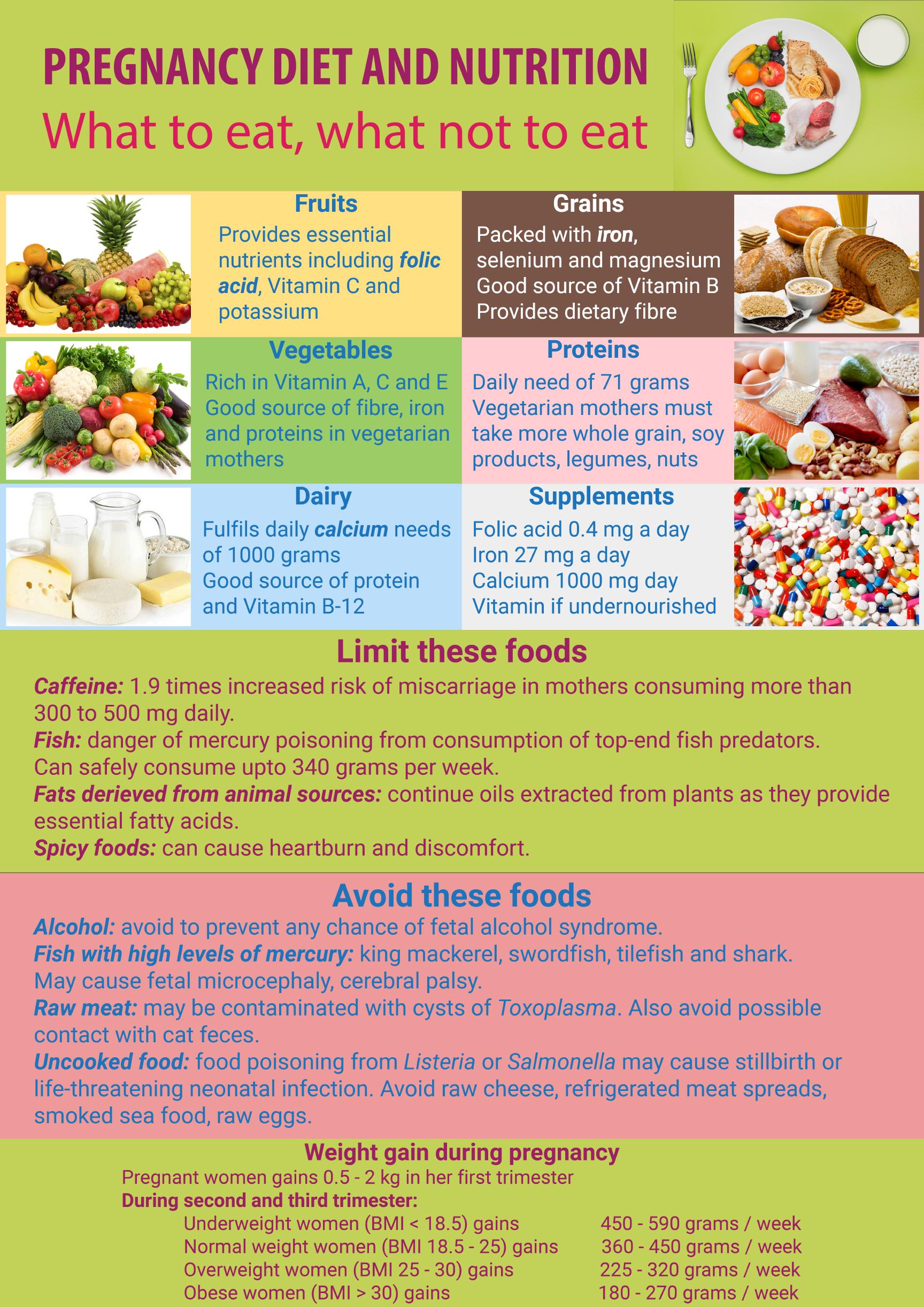
A pregnant or lactating mother should not restrict her diet because of any misconception. Meal frequency may need to be increased because pregnancy or breastfeeding leads to early hunger.
A properly balanced diet given to the mother results in a healthy mother and baby.
Foods to Consume in Plenty
During pregnancy and breastfeeding, the mother should consume plenty of:
- Fluids - breast milk contains lots of water and mothers may feel thirsty after breastfeeding
- Fruits as snacks and between meals
- Green vegetables, cereals and jaggery
- Eggs and lean meat
- Dals
- Milk and milk products
Foods and Substances to Avoid
Mothers should avoid these during pregnancy and breastfeeding:
- Coffee
- Tobacco
- Alcohol
- Recreational drugs
Common Myths About Lactating Mother's Diet
- The lactating mother should not consume citrus fruits or buttermilk
- The lactating mother should be exclusively fed on milk diet and porridge
- The lactating mother should consume less water
- The lactating mother should not eat cereal or banana
- Green vegetables or papaya can cause diarrhea in the newborn
Benefits of Breastfeeding for the Baby, Mother and Society
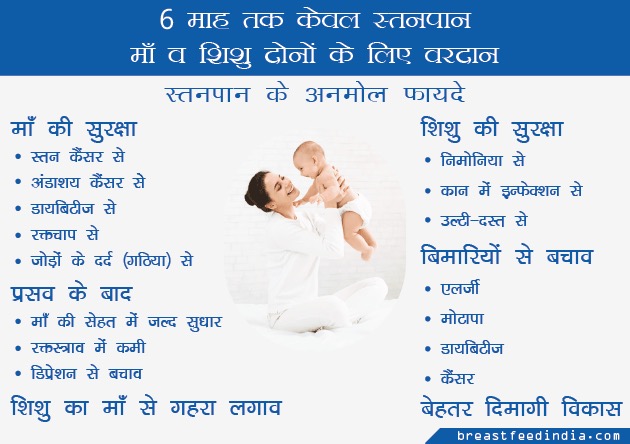
Breastfeeding provides comprehensive benefits that extend beyond nutrition, positively impacting the baby's health, the mother's wellbeing, and society as a whole.
Breastfeeding Benefits for the Baby
- Breast milk contains immune-enhancing factors which protect the baby from many infections
- Decreased incidence of diarrhea and abdominal discomfort
- Decreased incidence of respiratory and ear infections
- Better brain development
- No risk of malnutrition
- Good bone development
- Decreased incidence of diabetes, allergies and cardiovascular diseases in later life
For the Mother
- Breastfeeding soon after birth reduces blood loss from uterus
- Protection from breast cancer, ovarian cancer, osteoporosis and cardiovascular diseases
- Promotes mother-baby bonding
- Breastfeeding mothers lose weight and achieve pre-pregnancy figure more easily
For Society
- Breastfeeding is economical - no costs to parents and reduced burden of morbidity and mortality caused by top feeding
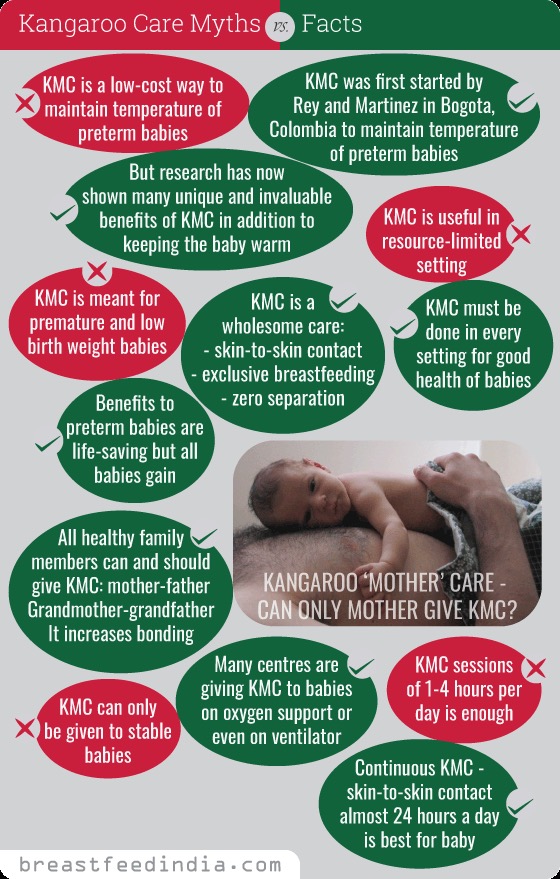
Kangaroo Mother Care
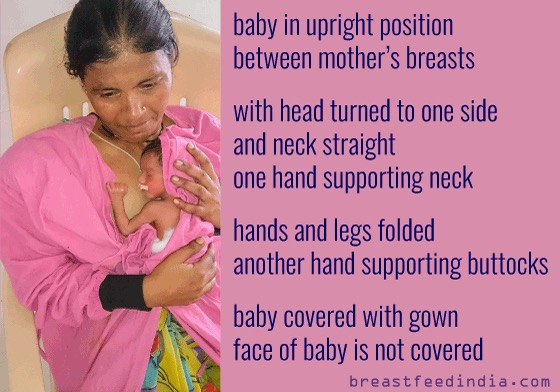
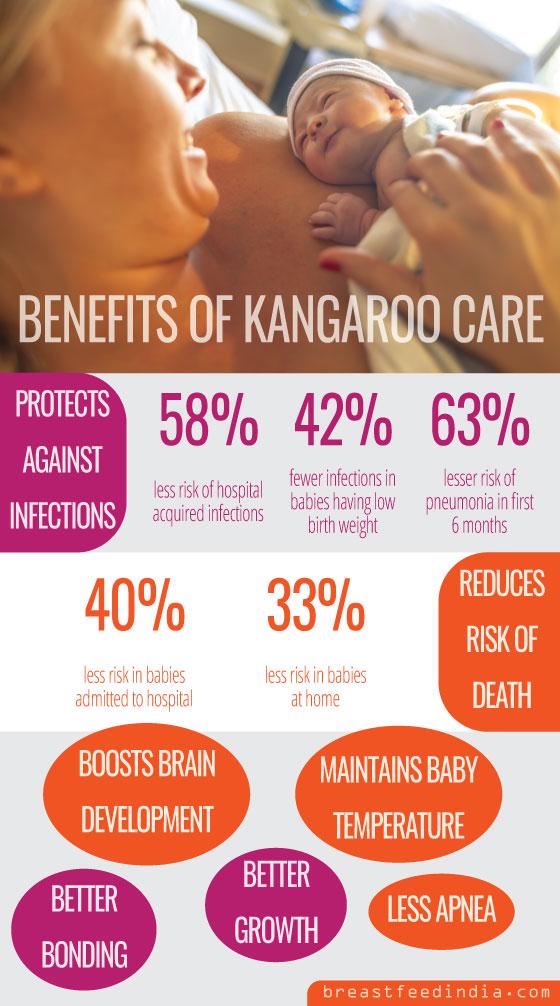
Kangaroo Mother Care (KMC) is an important practice that supports breastfeeding and provides multiple benefits for both mother and baby, especially for premature and low birth weight infants.
Social Factors Affecting Breastfeeding
There are many misconceptions as well as other social factors affecting breastfeeding. However, lack of education and awareness are common factors resulting in poor breastfeeding rates. Indian societies having high literacy have better breastfeeding rates as well as good infant survival.
Common Misconceptions About Breastfeeding
These are some common misconceptions about breastfeeding. Whenever confronted, these misconceptions should be gently resolved:
Misconception 1: Pre-lacteal Feeds
- Pre-lacteal feeds (honey, jaggery, sweet water or glucose, formula milk, tea, ghutti, etc.) are commonly advised by peer groups, but these are unnecessary and potentially harmful
Misconception 2: Milk Comes Late
- A belief that milk comes only after the second day in normal delivery and the third day in cesarean section
Misconception 3: Initial Milk Should be Discarded
- Initial milk (colostrum) should be discarded as it is unhygienic
Misconception 4: Maternal Illness
- If the mother has any fever or allergy, then she should not breastfeed her baby
Misconception 5: Expressing Milk
- Breast milk should not be expressed in front of anyone
Misconception 6: Extra Water Needed
- The baby needs extra water in warm months
Other Negative Factors
Some other factors are negatively affecting breastfeeding such as:
- Misinformation by health professionals
- The advertising impact of alternative products
Our Role in Promoting Breastfeeding
All a baby needs is the love of the mother and exclusive breastfeeding. This module has been designed to interactively explain the science behind the feeding physiology of a baby.
The Evolution of Breastfeeding
After millions of years of evolution, breastfeeding has become the best means of nutrition for a newborn of any mammal. Artificial formulas are no match for what nature has provided to us.
The Challenge
Unfortunately, society is tending to adapt to dangerous measures because of induced misconceptions.
Our Call to Action
Let us come forward to enlighten society for a better future.
References
-
World Health Organization. Exclusive Breastfeeding for Optimal Growth, Development and Health of Infants. Geneva: WHO; 2023. Available from: https://www.who.int/news-room/fact-sheets/detail/infant-and-young-child-feeding
-
Victora CG, Bahl R, Barros AJ, et al. Breastfeeding in the 21st century: epidemiology, mechanisms, and lifelong effect. Lancet. 2016;387(10017):475-490. doi:10.1016/S0140-6736(15)01024-7. PMID: 26869575. Available from: https://pubmed.ncbi.nlm.nih.gov/26869575/
-
Chowdhury R, Sinha B, Sankar MJ, et al. Breastfeeding and maternal health outcomes: a systematic review and meta-analysis. Acta Paediatr. 2015;104(467):96-113. doi:10.1111/apa.13102. PMID: 26172878. Available from: https://pubmed.ncbi.nlm.nih.gov/26172878/
-
Conde-Agudelo A, Díaz-Rossello JL. Kangaroo mother care to reduce morbidity and mortality in low birthweight infants. Cochrane Database Syst Rev. 2016;(8):CD002771. doi:10.1002/14651858.CD002771.pub4. PMID: 27552521. Available from: https://pubmed.ncbi.nlm.nih.gov/27552521/
-
World Health Organization. Kangaroo Mother Care: A Practical Guide. Geneva: WHO; 2003. Available from: https://www.who.int/publications/i/item/9241590351
-
Rollins NC, Bhandari N, Hajeebhoy N, et al. Why invest, and what it will take to improve breastfeeding practices? Lancet. 2016;387(10017):491-504. doi:10.1016/S0140-6736(15)01044-2. PMID: 26869576. Available from: https://pubmed.ncbi.nlm.nih.gov/26869576/
-
National Guidelines on Infant and Young Child Feeding. Ministry of Women and Child Development, Government of India. 2nd ed. 2006. Available from: https://www.iapsm.org/pdf/Guidelines/RMNCH+A/Guidelines%20on%20Infant%20and%20Young%20Child%20Feeding%202006.pdf
-
Lawrence RA, Lawrence RM. Breastfeeding: A Guide for the Medical Profession. 9th ed. Philadelphia: Elsevier; 2021. ISBN: 978-0-323-68013-4.